

How PA Systems and IP PBX Drive NABH Accreditation in Hospitals
In India, achieving NABH (National Accreditation Board for Hospitals & Healthcare Providers) accreditation is the ultimate benchmark for healthcare quality. It facilitates medical tourism, insurance empanelment, and proves adherence to strict international safety standards. However, achieving this certification requires more than just excellent medical care; it requires flawless internal communication.
One critical component of the NABH accreditation process is the establishment and maintenance of robust communication systems, which are essential for implementing Operating Procedures for Emergency Codes. To meet these requirements, healthcare establishments must maintain effective communication channels, supported by Public Address (PA) Systems and Internet Protocol Private Branch Exchange (IP PBX) systems.
What Are Emergency Codes?
Emergency codes are color-coded signals used in hospitals to communicate the type and nature of emergencies. These codes are broadcast over the hospital’s public address system, allowing specific response teams to act immediately. By standardizing communication, emergency codes minimize confusion, prevent panic, and ensure that emergencies are managed efficiently by the appropriate professionals.
The Role of Emergency Codes in Healthcare
A critical component of the NABH accreditation process is establishing standard Operating Procedures for Emergency Codes. These color-coded signals are broadcast over the hospital’s PA system to alert specific medical response teams without causing panic among patients and visitors.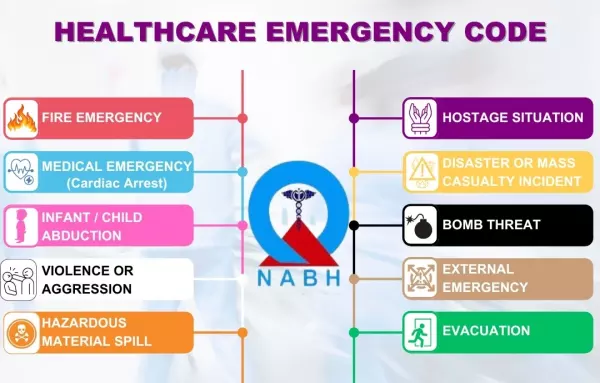
While specific codes can vary slightly, NABH-compliant facilities generally standardize the following emergency signals:
1. Code Red – Fire Emergency
2. Code Blue – Medical Emergency (e.g., Cardiac Arrest)
3. Code Yellow – Disaster or Mass Casualty Incident
4. Code Black – Bomb Threat
5. Code Pink – Infant or Child Abduction
6. Code White – Violence or Aggression
7. Code Orange – Hazardous Material Spill
8. Code Brown – External Emergency
9. Code Green – Evacuation
10. Code Purple – Hostage Situation
How IP PA Systems Ensure Hospital-Wide Safety
To relay these emergency codes accurately, a hospital cannot rely on outdated intercoms. To meet NABH standards, a modern IP-based Public Address (PA) system must be deployed. Key compliance features include:
-
Flawless Audibility: High-definition IP speakers ensure that emergency broadcasts are crystal clear across all noisy environments, from busy emergency rooms to quiet ICUs.
- Granular Zone Control: Instead of broadcasting a “Code Blue” to the entire hospital and causing unnecessary alarm, IP PA systems allow administrators to selectively broadcast messages only to the relevant wards or floors.
- Emergency Reliability: Modern systems are equipped with automated failovers and backup power integrations to ensure they remain fully operational during severe emergencies or power outages.
Why IP PBX is the Backbone of Hospital Communication
While the PA system broadcasts the alert, the Internet Protocol Private Branch Exchange (IP PBX) handles the complex, two-way communication required to actually manage the emergency.
In a hospital setting, an IP PBX system is mandatory for NABH compliance because it:
- Enables Unified Communication: It seamlessly integrates voice, video, and text messaging, ensuring doctors and nurses can communicate instantly regardless of the devices they are using.
- Accelerates Emergency Response: Through feature-rich IP PBX routing, staff can instantly dial a single emergency extension that simultaneously rings the pagers, mobile phones, and desk phones of the entire rapid response team.
- Provides Effortless Scalability: As the hospital adds new wings or clinics, an IP PBX can easily scale to accommodate hundreds of new extensions without requiring expensive physical rewiring.
The *astTECS Solution for NABH Compliance
Meeting NABH communication standards can be complex, but *astTECS simplifies the process. We provide enterprise-grade, integrated IP PBX and IP PA systems specifically engineered for the healthcare sector.
By unifying your telephony and public address infrastructure under one robust, open-source platform, *astTECS ensures that your hospital operates with maximum efficiency, total data security, and full compliance with national accreditation guidelines.




Leave A Comment